


The Old Resistor Trick?
Why Using Resistors to Tame Your Tone Is a Bad Idea
If you're an avid modder, there's a good chance you've stumbled upon that classic "old wisdom" echoing through dusty gear forums or dated social media groups regarding mixing pickup types or taming a piercing position with resistors.
Using HSS setups as an example, the suggestion is usually simple and sounds like a good plan: just solder a 470k resistor to a 500k pot so your humbucker "sees" 500k while the single coil "sees" 250k.
The logic seems sound—add a component to "stunt" the value and mellow out those aggressive highs.

However, while it might appear to be a clever hack, this "one weird trick" is a relic of the past and, frankly, there are way better options these days.
Enter the Trim Pot

So, what exactly is this thing?
Think of a trim pot as a standard potentiometer, just shrunk down to a miniature footprint. It's essentially a tiny, adjustable resistor built for the "set it and forget it" crowd. It gives you the power to pinpoint the perfect resistance for your circuit in real-time, letting you lock in the ideal setting once you find it.
The Problem with a Fixed Resistor: It's a One-Way Ticket to Tone Limbo
The sheer diversity of pickup designs and the subjective nature of what constitutes "good" tone means that a universal solution simply doesn't exist. Seriously!
By soldering a permanent resistor into your circuit, you're forcing a change upon a complex tonal ecosystem. It's like claiming a single square peg can perfectly fit every hole—a total fabrication.
A rig dialed in for smooth jazz will fall flat in a high-gain metal context, just as a metal machine isn't voiced for country twang.
Main reasons why the fixed resistor is dog water:
Bad Info Rehashed: Again, for the love of all things good ignore the "wisdom" reverberating through what feels like every comment section.
The idea that specific pot values are required for certain pickups to sound “correct” is simply incorrect; it's entirely subjective. For real! (Can you tell this gets to us??)
There are no guitar laws here—installing a 1-meg pot in a Telecaster won't send you to guitar jail or cause your guitar to suddenly stop working. You'll either love the sound or you'll hate the sound. That's it.
Treat dated rules of thumb as a loose guidelines only. I'm only half-joking, but this "rule" is as mandatory as not wearing white after Labor Day.
The Experimental Nightmare: Occasionally, standard pot values get you almost there—maybe 95%—but those stray frequencies keep you from that perfect "sweet spot." So you double the volume pot value and add a resistor.
Trying to pinpoint the exact resistance with fixed resistors is an exercise in futility. You're trapped in a tedious cycle of desoldering and resoldering to audition what is actually a minor tonal shift.
It's more than just annoying; it's a one-way ticket to gear failure. Every time you blast those part lugs with heat, you risk frying your components or at the least killing their lifespan. It's just bad practice!
Taming the Tonal Ecosystem: How the Silver Sky Mastered the Art of the "Tune"
The PRS Silver Sky is a prime case study of a guitar meticulously "voiced" for a very specific sonic profile.
In the modern guitar world, it’s wild that they even did this, but consider the 635JM pickup model version of the Silver Sky: the design incorporates fixed resistors on each individual pickup, plus another one sitting right on the master volume.
This whole setup is engineered to mellow out aggressive, piercing highs, effectively taming the top end for a smoother response.
While designing a rig like this, you could obviously make much faster and more precise adjustments using a trim pot instead of a fixed component. Once you finally dial in that perfect "sweet spot," PRS would probably measure the values and send the specs off to the manufacturer. Boom—efficiency!
Mastering the Adjustments: The Right Way to Deploy a Trim Pot

In a typical setup, you'll want that trim pot running in parallel with the pickup you need to mod or directly on the volume input. Simple! To wire the trim pot itself, just ground the third lug and connect the middle wiper to the pickup or volume. This transforms it into a variable resistor. From there, a simple screwdriver is all you need to dial in your tone.

And hey, if you're one of those eccentrics who insists on drilling thirty different control knobs into your instrument for the ultimate tone control, you could even wire this to a standard linear pot for on-the-fly adjustments. You do you! (But.. probably don't.)

Let’s get back to the serious stuff: Aligning your trim pot and standard pot values.
This is a case-by-case situation that gets confusing fast. Honestly, it’s a massive headache if you aren't ready for it!
My personal preference is to target a +/- 20% window of the resistance goal, but if you aren't a total circuit wizard, just use a calculator online.
The "lazy man" method usually leans on a basic 1:2 ratio. That "old wisdom" we mentioned earlier pairs a 500k pot with a 470k resistor to hit about 242k. But, if you throw a 1000k trim pot onto that 500k pot, you’re starting around 333k.

Essentially, that's as close as standard trims will get you to that 20% threshold. From that point, you just dial the resistance down until it sounds right.
The wild part? Measuring the final resistance after you’ve found the "sweet spot." No joke!
Back when I was doing custom work, I built thousands of unique harnesses and even did secret circuit designs for a bunch of boutique HSS Strat builders. In those HSS rigs, customers were convinced they needed exactly 470k. But once they actually used their ears and realized they could tune to taste, the "best" setting for those single coils was almost never 470k. In so many cases, they landed between 100k and 200k—which is like using a 50k or 100k volume pot. It’s a total 180º from that outmoded "rule of thumb."
The Takeaway:
I know we're just being total Circuit Nerds, but this advice is meant to be sincere and save you some time, frustration, and probably cash.
While that "old resistor trick" looks like a clever hack, it's a relic of a past era before more precise, flexible solutions became available for pennies on the dollar. Don't sacrifice your instrument's tonal integrity. If you're looking to dial in your pickups until they hit that perfect "sweet spot," invest in a trim pot. Your ears and your rig will thank you.
Last thing I swear!
If this latest circuit-nerd manifesto or our deep-dive technical ramblings actually hit the spot, do us a massive solid and blast the link to your fellow gear-heads.
And hey, if you’re the lucky one who just got sent here—hi, hello, welcome to the cool kids' table! You might as well pull up a chair and join our newsletter, because this flavor of deeply obsessive, circuit-centric rambling is basically our standard operating procedure.
We truly appreciate the support. Honestly, the master plan is to broadcast this info so far and wide that the gear community starts rehashing these facts as common knowledge without even realizing it started as a rant about bad circuit design.
Read more
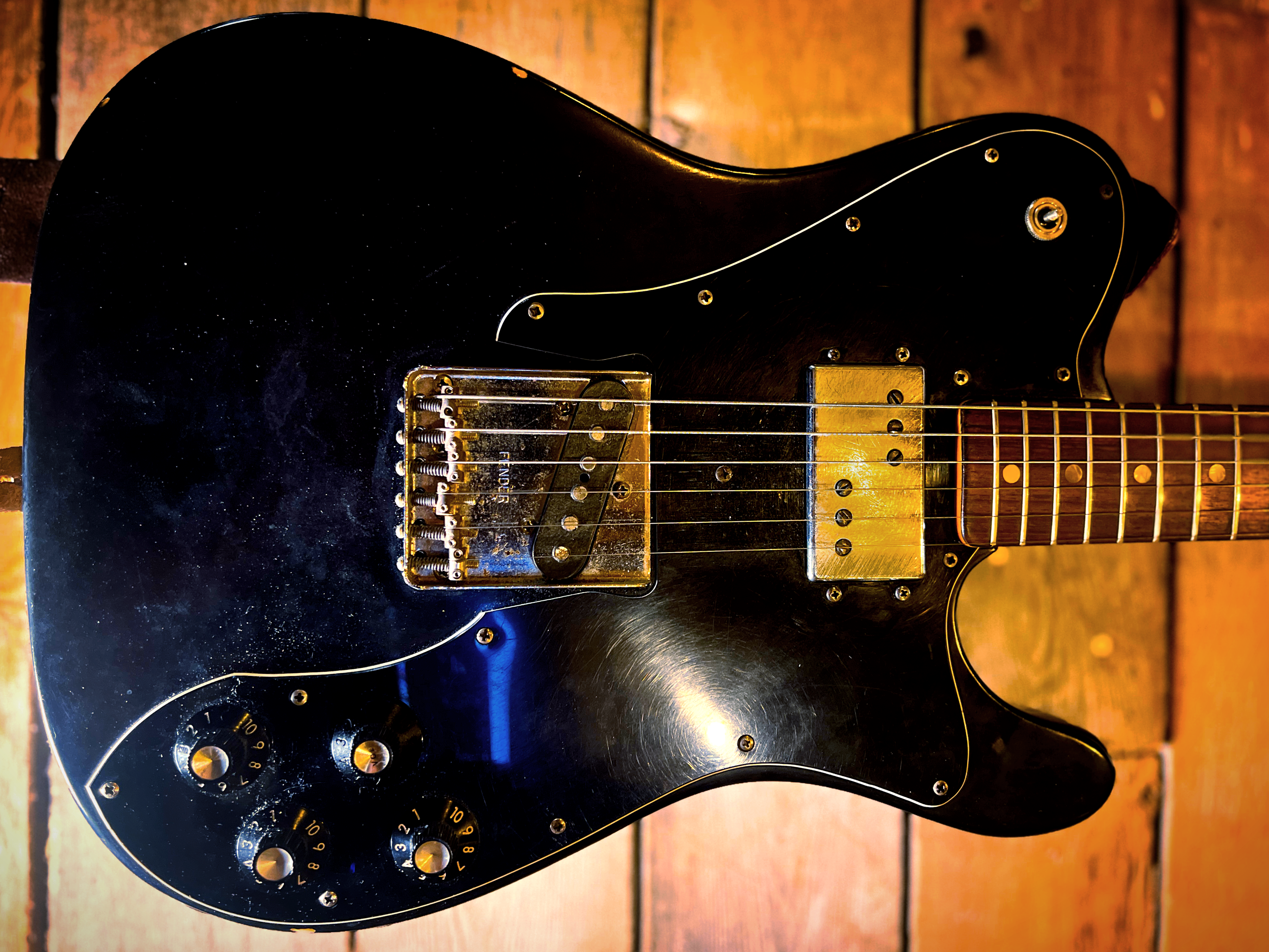
The Allure of Mix-and-Matching Pickups
Hey Gearheads and Tone Chasers! Ever looked at your guitar and wondered if you could squeeze even more sonic goodness out of it? One of the most exciting and often overlooked avenues for tone sculp...
Read more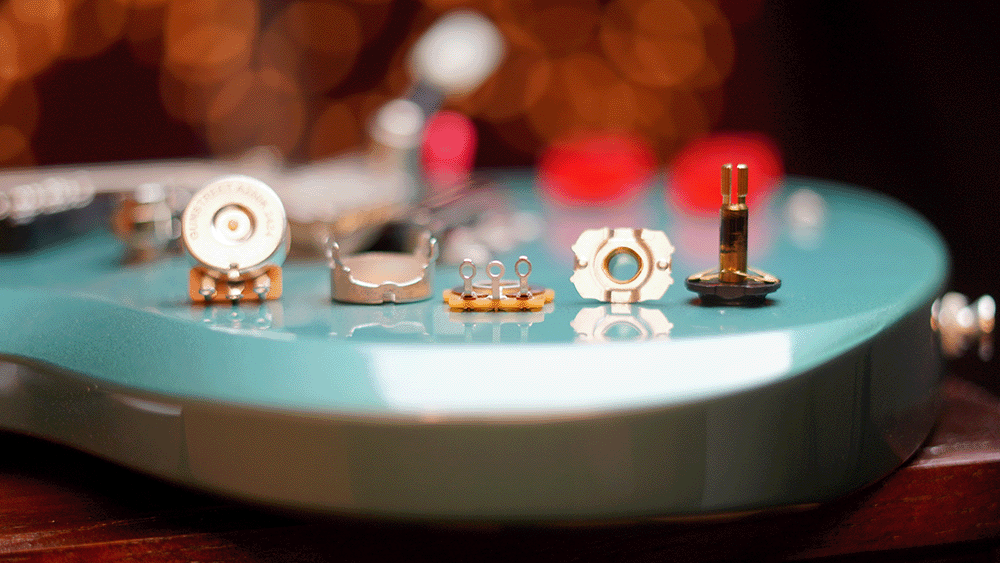
5 Ways to Accidentally Kill Your Guitar's Potentiometer (and How to Avoid Them!)
It happens to the best of us: you're deep into a performance or wiring project, chasing that perfect sound, when that vital component suddenly dies. In guitar electronics, the potentiometer is the ...
Read more
2 comments
I’m not sure what happened to Don in the 70s, but this is truly amazing. As someone who uses resistors constantly, I can’t believe I never thought of trying this myself. It’s a technique commonly used on pedals.
John R
Solution looking for a problem? Go with the 250k pots and, let’s face it, a bridge humbucker is seldom used for subtlety, so who cares about a bit of lost top end? 3 single coils were fine for decades, then some schmuck just HAD to add an HB in the bridge and the floodgates opened! (Full disclosure: I added a DeArmond HB to the middle of my 73 hardtail Strat in 1975. The idea being that the HB would be more like a Gibson neck. Wasn’t… THEN I put in a 6 way rotary selector. Gave me all sorts of series, etc. combos. I only had purple wire… Fortunately it worked perfectly first time. Guitar gone. Still have the pickup…)
Don Hansen
Leave a comment
This site is protected by hCaptcha and the hCaptcha Privacy Policy and Terms of Service apply.