
Article: The Science of Sound Part One: Understanding Guitar Filter Circuits
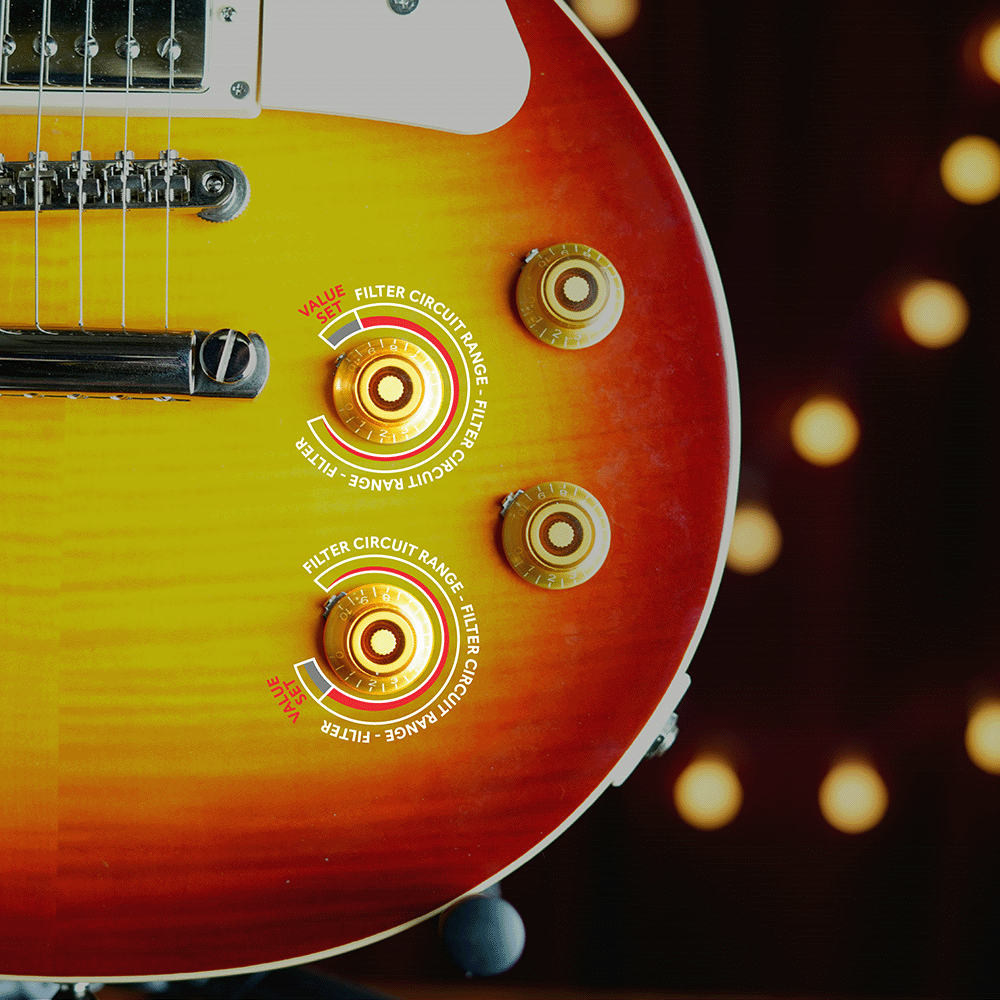
The Science of Sound Part One: Understanding Guitar Filter Circuits
I can’t believe it, but if Gunstreet were my child, they’d be in middle school by now.
That means that, in addition to 11 years of spec'ing out circuits, I've also been dishing out advice to our growing community of modders. And with so many fresh faces in the Gunstreet community, it's worth circling back to the topics that absolutely dominate my inbox: Filter Circuits and Value Sets.
These concepts are so fundamental to your guitar's performance that they each deserve a dedicated deep dive. We’re kicking things off with Part One: Filter Circuits.
It might sound intimidating, but the architectural logic is actually pretty darn intuitive.

To truly 'Upgrade' your rig, you want to steer clear of gimmicky, magical, "one weird trick" advice you'll often find on gear pages. The most useful thing you can do is learn the distinction between these concepts and how they actually affect your sound in real life.
Value Sets: Specific component ratings, such as pot resistance and capacitor values that establish your instruments tonal baseline
Filter Circuit: The architecture that dictates the tactile response and sonic personality as you tweak the controls
This following is a breakdown of these architectural blueprints, without crowning a single winner or "best" version. That's because there's no one setup that fits every player. At the end of the day, whatever resonates with your gear and style is the answer you're looking for. But, understanding what's going on will help you to trust your own ears and phase out the endless noise of online gear debates.
(N.B. If you are struggling with option paralysis and just want to be told what to do, have no fear! I've included my personal recommendations, distilled from years of hands-on community feedback, towards the end of this article)

Lets start, what is a Filter Circuit?
Think of a Filter Circuit as the fundamental blueprint for your entire rig. The way its designed will channel the tones, response, and overall vibe as you sweep through your controls.
Let's define two key terms:
-
-
High-Pass Filter: A circuit designed to retain high-end frequencies as you roll off the control. It allows the "highs" to pass through while reducing the "lows."
-
Low-Pass Filter: A circuit that retains low-end frequencies. As you turn the knob down, high-end character is lost, leaving a warmer sound.
-
A quick technical side note so any educated tech out there doesn't go Huh?! Because standard guitar wiring relies on passive circuitry, every layout is technically functioning as a low-pass filter. We’re using these descriptions slightly —or vary lol— broadly here, purely to build a clear mental blueprint of how these architectural shifts translate to your ears—
Gibson Style: 50s vs. Modern Wiring

Most players unwittingly begin their journey within the Gibson sonic universe.
Gibson's circuits have pervaded thousands of models, with a lineage that's spanned several pivotal eras, starting with the legendary high-pass ‘50s layout—still arguably the most famous design to date—before transitioning into the low-pass architecture commonly known as "Modern."
Don't be misled by that "Modern" moniker, though. This schematic is old enough to sign up for AARP.
The '50s "Vintage" Approach

Employed throughout the golden era, and a defining feature of the iconic '59 Les Paul, this architecture connects the tone circuit directly to the volume pot's output lug. This configuration automatically creates a high-pass filter, ensuring a PAF's high-end clarity of remains preserved even as you roll back the volume.
-
The Good: It creates a "transparent" EQ that purists love. Many players claim your pickup's EQ remains more consistent as you roll back the volume.
-
The Potentially Less Good: It is "quirky." The audible taper, defined as how your ears perceive the “sweep” of the knob, can feel super steep (see the audio clip below) or inconsistent. Additionally, because the tone and volume are so interactive, using the tone knob can occasionally cause a perceived drop in volume especially with mismatched pot values like a 500k volume and a 250k tone (a common idiosyncracy in vintage Gibsons)
Here is the '50s blueprint with the volume rolled back to 5. Each audio sample utilizes an identical value set and pickup configuration for the purest possible architectural comparison.
The "Modern" Approach

As musical tastes and amplifier technology evolved, Gibson moved the tone circuit to the volume pot's input. This creates a low-pass filter with a much "smoother" audible taper.
-
-
The Good: Very consistent sweep; works well with modern distortion pedals.
-
The Less Good: Frequently dubbed the "mud circuit," this design causes high-end sparkle to vanish as you roll off the volume. This effect is especially brutal if your pickups are already overwound or bass-heavy—it just makes your overall tone feel flat. No bueno!
-
The Treble Bleed Solution

So, if you’re hunting for the silky audible taper typical of Modern wiring but refuse to sacrifice the high-end sparkle of the ‘50s, the Treble Bleed is your best friend.
This architectural “hack” essentially flips any low-pass filter into a high-pass design. Contrary to what most beginners assume, there isn’t just one way to make one of these things—there are endless ways.
Here are three common configurations:

-
Parallel (0.001uf Capacitor & 100k Resistor): The most ubiquitous version out there. It delivers a softer top-end response, though it tends to mess with the consistency of your audible taper.
-
Series (0.001uf Capacitor & 100k Resistor): This layout addresses those taper wonkiness issues while maintaining that same mellow high-end character.
-
Capacitor Only (0.001uf): After over a decade of blind tests and community feedback, this is our hands-down favorite and the only option we use at Gunstreet. It offers maximum high-end, even if some purists miss the "organic" or “transparent” roll-off of vintage 50s layouts. (This is the one we used for the Audio clip below)
It's worth reiterating: the specific way you blueprint your treble bleed dictates the entire tactile response and sonic personality of your rig. Messing with different value sets is a killer way to dial in a custom feel that's all your own. Try different things, and if you land on a recipe of your own, name it after yourself!
The Fender Approach
Leo Fender’s original approach to filter circuits is top-tier engineering. This is probably because he was obsessed with field-testing his designs with actual players (something we always try to do when designing our own circuits or products!).
The result was a filter circuit that felt correct right out of the gate.
Both Teles and Strats shipped with a "modern" layout, though Fender's version is slightly different from Gibson's.
Fender-style filter circuits have the resistor sitting in front of the capacitor rather than behind it. This architectural quirk changes the audible taper on the tone ever so slightly. But, what that really means, is that what we call Modern is actually vintage-correct for most Fender rigs.


Fenders 50s Approach

It’s a recurring theme around here: we are true circuit nerds.
A prime example of this is our Fender-inspired ‘50s blueprint which pays homage to the very first prototypes and instruments Leo Fender made in his shop. If you’re a massive geek, you can pretty much view this layout as the "great-grandfather" of the famous "Greasebucket" circuit.
The real secret sauce here is found in the tone control’s response. Instead of that aggressive, "muddy" tone roll-off that plagues standard "modern" rigs, this circuit blueprint emphasizes a mid-dominant sonic profile. It’s designed to help your instrument cut through a dense mix, making it a killer match for a variety of music genres like jazz, punk, reggae or paired with brighter, twang-heavy guitars like a vintage Tele, jag, or Jazzmaster.
Summary

Choosing a filter circuit shouldn't be about vintage accuracy, it should be about how you want your guitar to respond to your touch.
Whether you prefer the interactive transparency of Gibson '50s wiring, the smooth reliability of Modern, or the clarity of a Treble Bleed, understanding the architecture is the first step to mastering your tone.
Hold on, what's my spicy hot take on the best setup?
Okay, so you want me to make the choice for you.
Here’s my pick: Treble Bleed, all the way.
We’ve tailored the treble bleed circuit to fit the widest range of players, and it shows. Gibson-based ‘50s wiring, although the most famous, gets more haters than lovers. It's just a fact! Its quirkiness and learning curve just turn a lot of players off. And Modern is what you want to get when you’re looking for a simple repair or a durability refresh.
So, what’s your verdict? Did we dive too deep into the architectural weeds, or was the logic clear and intuitive? Drop us a line in the comments. With so many fresh faces joining our community lately, we’re striving to strike that perfect balance: satisfying the "technical geek" cult we’ve cultivated over the last decade while welcoming those just beginning their gear journey.
If this breakdown resonated with you, pass it along to a fellow player. I truly love making these guides, and your support ensures we can keep the deep dives coming!
Read more
5 Ways to Accidentally Kill Your Guitar's Potentiometer (and How to Avoid Them!)
It happens to the best of us: you're deep into a performance or wiring project, chasing that perfect sound, when that vital component suddenly dies. In guitar electronics, the potentiometer is the ...
Read more
1 comment
I fell into the Gibson 50s trap. Tried it. HATED IT. Expressed my opinion in a Facebook group. Everyone told me I was wrong and that it was because I didn’t use the correct “vintage taper” or 550k pots, and PIO caps. Some BS like that. I gutted that thing and tried the treble bleed cap mod. Holy crap. I love it, great for Single coil sounds.
Arnold B.
Leave a comment
This site is protected by hCaptcha and the hCaptcha Privacy Policy and Terms of Service apply.